Bridging Cyber Horizons: The CyberHubs Belgium Twinning at ESA-ESEC
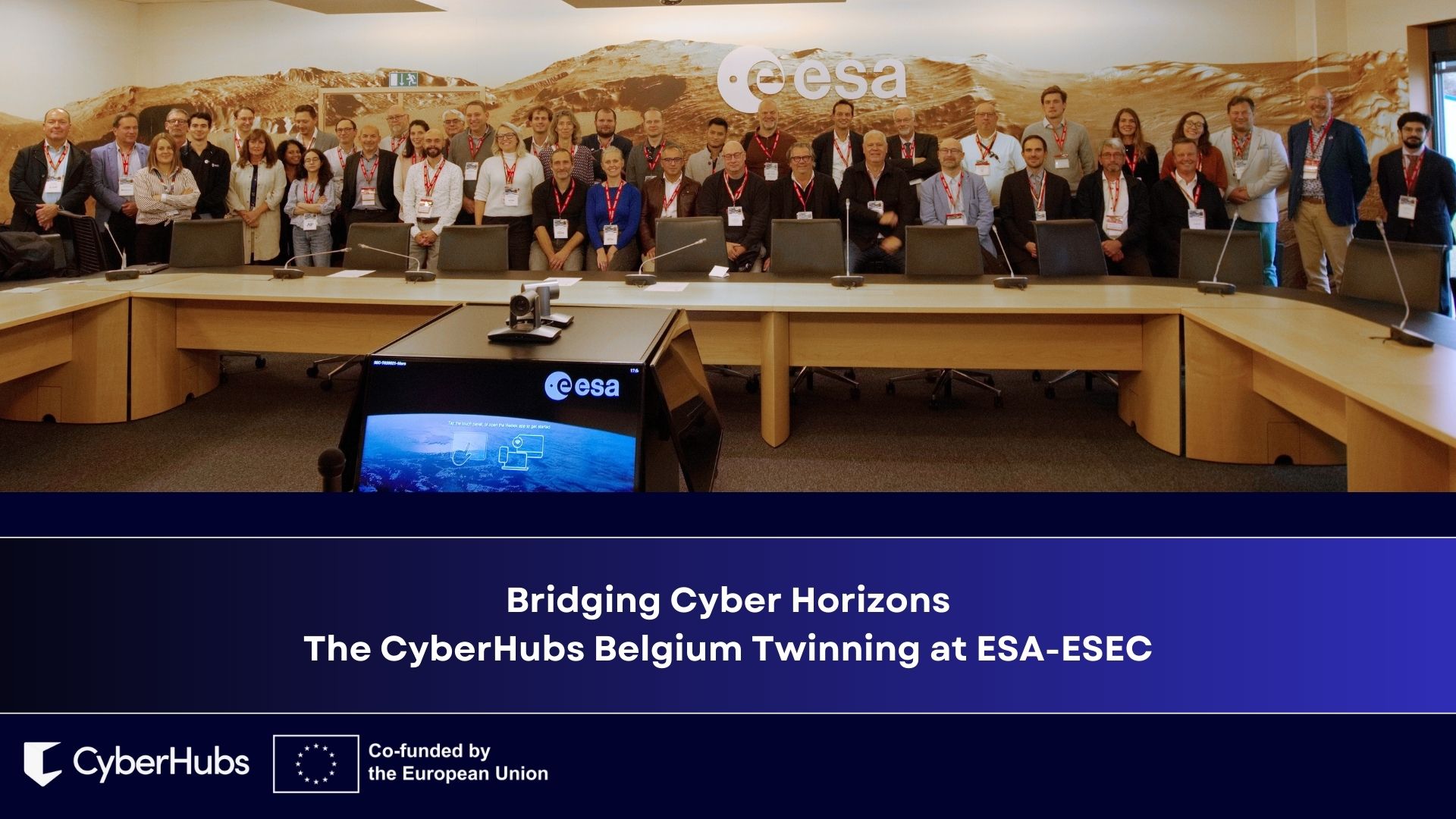
On September 22, 2025, CyberHubs Belgium gathered 50 participants at ESA’s European Space Security and Education Centre (ESEC) in Redu for a dynamic afternoon of learning, collaboration, and exchange of best practices among the 7 CyberHubs and the wider Belgian cybersecurity ecosystem.
The afternoon in Redu began with anticipation and clear purpose: to strengthen ties across the 7 CyberHubs and the growing Belgian cybersecurity ecosytem, connect with international peers in an inspiring, high-security environment. Under a bright autumn sky, participants arrived from across the country — some by carpool, others logging in virtually — to take part in a concentrated afternoon of talks, discovery, and dialogue. The event’s goal was clear: to foster collaboration between industry, academia, and public institutions, and to learn from Belgian and European examples shaping the future of cybersecurity. A warm welcome coffee awaited participants at ESA-ESEC, setting a collegial tone. Conversations quickly unfolded among professionals from diverse backgrounds.
The official program opened with two words of welcome. Jean-Luc Trullemans, Head of ESEC, offered an inside look at ESEC’s mission in securing space operations and promoting education. Eric Van Cangh, Senior Business Group Leader Cyber Security and CMiB Leader at Agoria, introduced CyberHub Belgium’s vision: a collaborative model for regional excellence in cybersecurity.
The afternoon’s presentations reflected the richness of Europe’s cybersecurity ecosystem:
- Johan Klykens (CCB) set the tone with insights on the CyberFundamentals Framework, highlighting its importance as a baseline for organisations strengthening their security posture.
- Kayla Giroud (Global Cyber Alliance) presented Woman4Cyber and addressed diversity in cybersecurity, underlining how inclusion drives innovation and resilience in the field.
- From Estonia, Grete Soares de Camargo (ITL) and Birgy Lorenz (Tallinn University of Technology) shared Estonia’s approach to building bridges across European cybersecurity ecosystems and implementing best practices in education. Their interventions brought valuable lessons from one of Europe’s most advanced digital nations.
- Bastien Bordes (ESA) gave participants a glimpse into cybersecurity at ESA, focusing on the pivotal role of ESEC in managing security operations for space missions.
- Marc Taymans (Nexova) emphasized that securing critical infrastructure requires practice, not just theory, drawing on his company’s experience in operational resilience.
- Finally, Pierre-Yves Defosse (IDELUX) presented the regional perspective, showcasing how IDELUX supports cybersecurity infrastructure and innovation in Wallonia.
Together, these speakers painted a vivid picture of cybersecurity as a collaborative and evolving ecosystem — one that depends on cross-sector dialogue and continuous practice.
Following the presentations, participants embarked on an exclusive site visit of ESA-ESEC’s facilities. Guided by ESA staff, they explored the Security Operations Centre (SOC) and witnessed the ongoing construction of the new ESEC Cyber Security Centre, designed to host a future operational facility. The visit offered a rare behind-the-scenes look at how cybersecurity principles are applied in the context of European space operations.
Set amid the scenic Ardennes, ESEC’s campus added to the sense of inspiration, where technology meets nature, and collaboration meets innovation.
As the afternoon transitioned into evening, attendees gathered for a networking reception on-site at ESA. The atmosphere was both relaxed and energized, with conversations flowing easily between professionals from academia, industry, and public bodies, illustrating the event’s true purpose: to connect people as much as systems.
The day concluded with an optional dinner in Louvain-la-Neuve, where 30 participants continued their discussions in a more informal setting. Around the table, reflections turned to the future: new connections and next steps for CyberHubs.

Subscribe to our newsletter
Stay updated on the project’s news, events, free resources and more.
"*" indicates required fields